
Why Buying a Used RV Can Save Money
Most RV owners buy used RVs. Buying a pre-owned RV is a budget-friendly alternative to buying a new, recent RV model.
However, hidden additional costs can erase that cost-consciousness very quickly. This is why it’s a smart idea to get a professional inspection prior to purchase. Even well-maintained RVs can develop costly failures!
Without proper research and preparation, buying a used RV can become an expensive mistake. Know what costly mistakes used RV buyers make so that you can avoid dipping into your savings on a rig that was supposed to save you money.
Before You Buy a Used RV
The best way to avoid expensive surprises is to:
- Hire a certified RV inspector
- Check for water damage and maintenance records
- Test every major RV system
- Verify tire age and condition
- Budget for future repairs
- Consider an RV extended warranty if eligible
Why Used RV Buyers Often Underestimate Repair Costs
A used RV can quickly (and unexpectedly) eat through your repair budget. Sometimes, buyers underestimate repair costs, failing to account for factors like gaps in maintenance history, vehicle complexity, or problems that seem like minor fixes at the outset.
RVs Are More Complex Than Most Vehicles
It’s important to keep in mind that RVs are more complex than most vehicles. They are large, containing many working components and appliances. Here’s a list of just some of the many complex systems within a typical RV:
- Plumbing
- Electrical
- HVAC
- Appliances
- Slide-outs
- Roofing
- Chassis and engine (motorhomes)
- Suspension and brakes
Small Problems Can Become Major Repairs
Minor issues that seem small during a walkthrough have the potential to be devastating repair problems. For example, soft flooring may not seem like a big deal, but it could indicate pervasive water damage or even mold.
When looking at a used RV, keep an eye out for cracked seals, soft or warped flooring and cabinetry, delamination, non-functioning appliances, and signs of water damage.
Mistake #1: Skipping a Professional RV Inspection
Why a Walk-Through Isn’t Enough
Possibly the most important costly mistakes used RV buyers make is skipping a professional RV inspection. Surface appearance rarely tells the full story. Consider hiring an inspector for a professional inspection. Drawing upon specialized expertise, an inspector will thoroughly examine all major mechanical and electrical components and provide a detailed assessment of findings.
What a Certified RV Inspector Checks
Include:
- Roof condition
- Moisture intrusion
- Exterior seals
- Slide operation
- Electrical systems
- Plumbing
- Generator
- Appliances
- LP gas system
- Tires
- Frame
- Chassis (motorhomes)
How an Inspection Can Save Thousands
The cost of an inspection is small compared to surprise repair bills. One thorough inspection can save you several thousand dollars on repairs or even an RV by catching problems before you’ve inherited them.
Mistake #2: Ignoring Signs of Water Damage
One of the most devastating costly mistakes used RV buyers make is ignoring or missing signs of water damage. Water is a huge problem for RVs. Extensive water damage is expensive to deal with and poses potential health risks due to mold exposure.
Water damage occurs due to unexpected water intrusion via
- Roof leaks
- Window leaks
- Plumbing leaks
Common Warning Signs
- Soft spots
- Musty odors
- Bubbling walls
- Ceiling stains & discoloration
- Delamination
- Mold
Why Hidden Moisture Is So Expensive
Excess moisture gets trapped in structural components, like floorboards, wall paneling, or ceilings. Repairs demand extensive structural replacement and labor costs.
Mistake #3: Assuming Everything Works Because It Powers On
Test Every Major RV System
Checklist:
- Air conditioner
- Furnace
- Refrigerator
- Water heater
- Generator
- Converter
- Inverter
- Slide-outs
- Leveling system
- Awning
- Water pump
TIP: Use a voltmeter or multimeter to test battery output. An inspector will do so, too.
Mistake #4: Overlooking Tire Age and Suspension Components
Tires Can Age Out Before They Wear Out
DOT date codes – Rubber isn’t fresh forever. The Department of Transportation requires date codes for tire manufacturers. When buying used, refer to these date codes to get an idea of whether the tires require replacement. The tire DOT date code is the 4-digit number at the end of the designation number located on the sidewall. The last four digits represent the week and year the tire was manufactured.
Dry rot – Dry rot is the deterioration of the tire rubber, which causes cracking in the sidewall or tread. Cracking reduces tire integrity and increases the risk of a blowout, posing a safety hazard. Look for cracking, stiffness, or fading on the tires.
Blowout risks – Driving on expired, bulging, or dry rotted tires increases the risk of a blowout. Because RVs are so heavy, it is especially important to follow tire recommendations.
TIP: If the tires need to be replaced, consider asking the seller to replace them or negotiate cost of replacement out of the asking price.
Don’t Forget the Suspension and Brakes
Suspension and brake components are where a professional inspector come in handy. However, some obvious signs of preexisting problems include rust, corrosion, and dryness (no lubricant). Be sure to request a maintenance record of brake tests and alignments.
Ask about…
- Bearings
- Springs
- Shocks
- Axles
- Brake components
Mistake #5: Neglecting Maintenance Records
Service History Matters
Gaps in maintenance records increase buying risk. Regular, verifiable upkeep is a strong indicator that the used RV is in good working condition.
Look for records involving:
- Oil changes
- Roof resealing
- Brake service
- Appliance repairs
- Generator maintenance
- Winterization (if applicable)
Mistake #6: Buying Based Only on Price
The Cheapest RV Isn’t Always the Best Value
It may be tempting to jump on the cheapest option, but the cheapest deal is rarely the best deal. You may end up covering the difference in surprise repair costs.
Consider these risk factors when faced with a deal that seems to good to be true:
- Deferred maintenance
- Missing maintenance records
- Immediate repair needs
- Total ownership cost
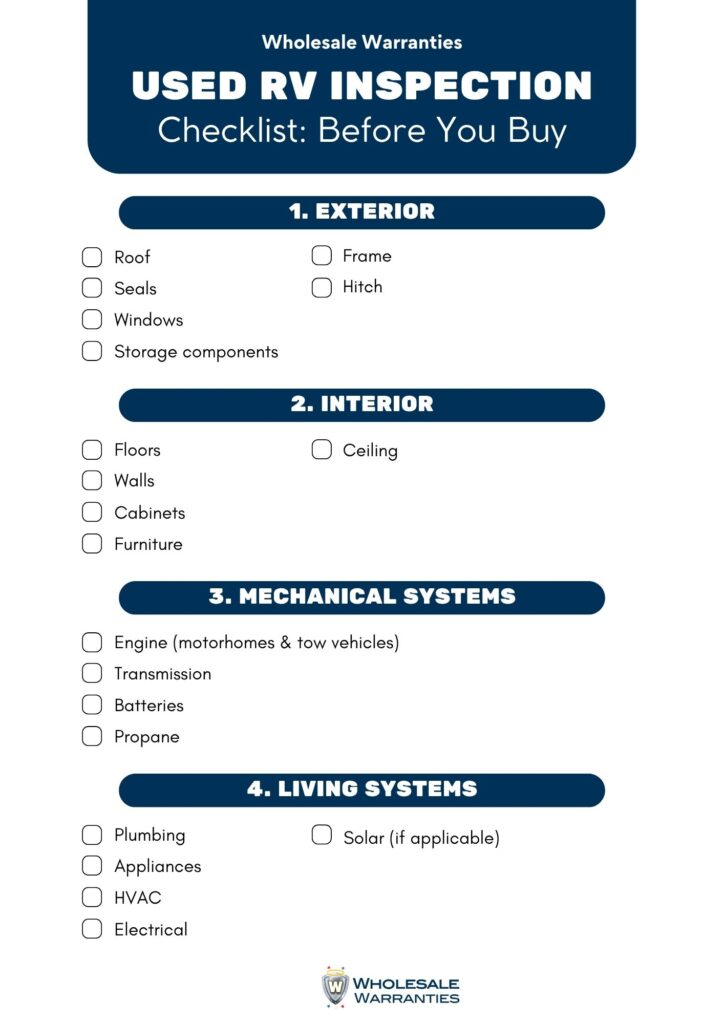
Used RV Inspection Checklist: Before You Buy
Exterior
- Roof
- Seals
- Windows
- Storage compartments
- Frame
- Hitch
Interior
- Floors
- Walls
- Cabinets
- Furniture
- Ceiling
Mechanical Systems
- Engine (motorhomes)
- Generator
- Transmission
- Batteries
- Propane
Living Systems
- Plumbing
- Appliances
- HVAC
- Electrical
- Solar (if equipped)
Should You Consider an RV Extended Warranty?
Even Thorough Inspections Can’t Predict Every Mechanical Failure
Inspections reveal current conditions but cannot predict future breakdowns caused by normal wear, aging components, or unexpected failures. Depending on the age and mileage of the RV, used RVs are often eligible for extended service coverage.
What an RV Extended Warranty May Help Cover
Most exclusionary and listed component warranties cover the major RV components, such as:
- Air conditioning systems
- Refrigerators
- Water heaters
- Electrical components
- Slide-out mechanisms
- Leveling systems
- Engine and drivetrain
Why Many Used RV Owners Choose Additional Protection
Used RV owners who choose additional protection in the form of an extended warranty are seeking budget predictability, reduced out-of-pocket repair expenses, and greater confidence during long trips.
When reviewing extended warranty options, be sure to thoroughly read and understand the contract terms, exclusions, and coverage limits prior to purchase. Some warranties do not require pre-purchase inspections but may instead have a waiting period or deny claims based on preexisting conditions. When researching warranties, find out if the company requires inspections. At Wholesale Warranties, the cost of the inspection is deducted from the cost of the policy.
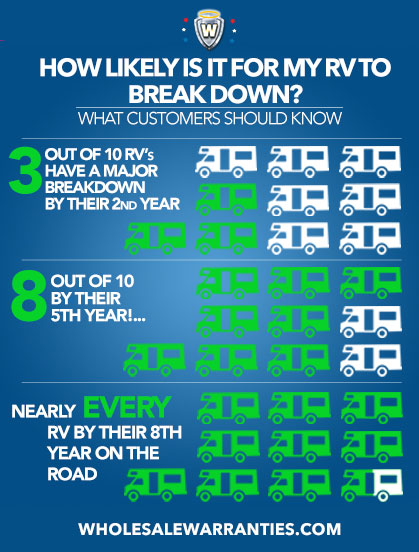
Older RVs are more likely to experience an unexpected breakdown, which is one of many reasons used RV owners opt into extended coverage.
A Smart Purchase Starts With a Thorough Inspection
The best way to avoid making a critical mistake when buying a used RV is to get a professional inspection from a licensed RV inspector. Remember that water damage is one of the most expensive problems to repair, and that it isn’t always obvious.
Test every major system, review maintenance records, and factor repair costs into your decision prior to purchase. Finally, consider whether an RV extended warranty aligns with your budget, travel style, and risk tolerance for unexpected repairs.
A used RV will always cost more than the asking price!
Is a used RV inspection worth the cost?
An inspection is always worth the cost when buying a used RV. Receive quotes from multiple qualified inspectors to ensure fair pricing.
Can I inspect a used RV myself?
Unless you’re a qualified professional, a DIY RV inspection will not be as thorough.
What is the biggest red flag when buying a used RV?
The biggest red flag when buying a used RV is a lack of transparency, such as missing maintenance records and disclosures about the condition of the unit.
How old is too old for a used RV?
A good RV will surpass the 20-year and 100,000-mile mark. However, keep in mind that rigs beyond these limits will be more prone to breakdowns and ineligible for most warranty coverage.


