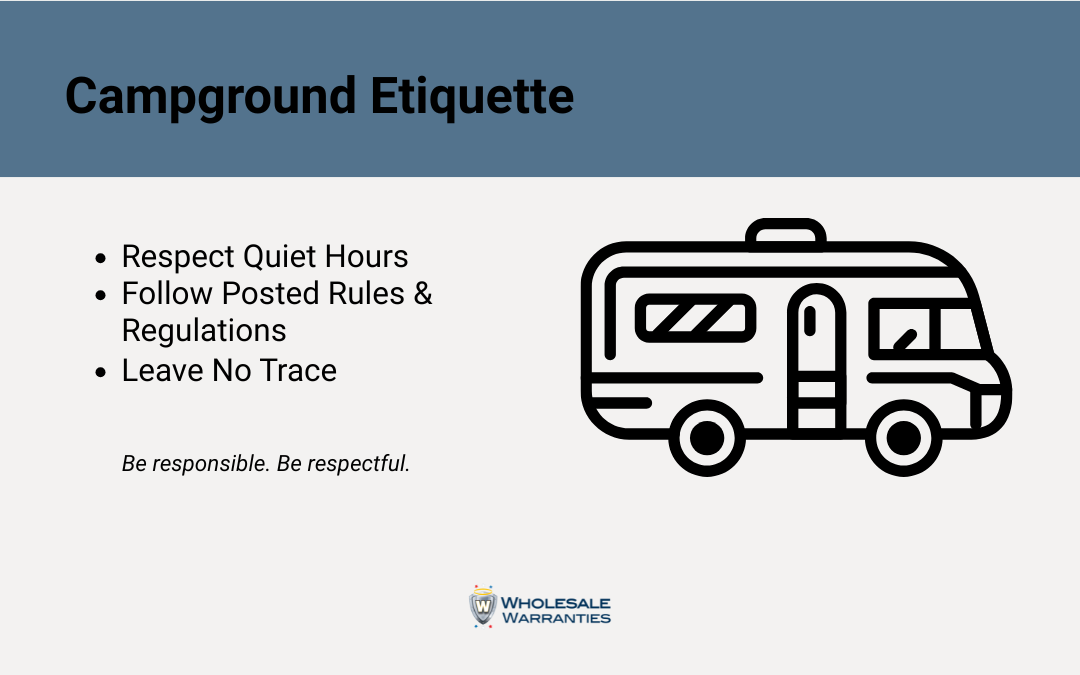
Campgrounds are public spaces, which means overnight guests are expected to adhere to basic considerations. Campground etiquette are guidelines to follow when sharing public space and amenities with fellow campers.
However, not all etiquette expectations are written rules. Etiquette is a set of normative social expectations founded upon the notion of mutual respect—but that doesn’t diminish it’s importance. Following proper campground etiquette maintains a safe, and comfortable community environment for all guests to enjoy.
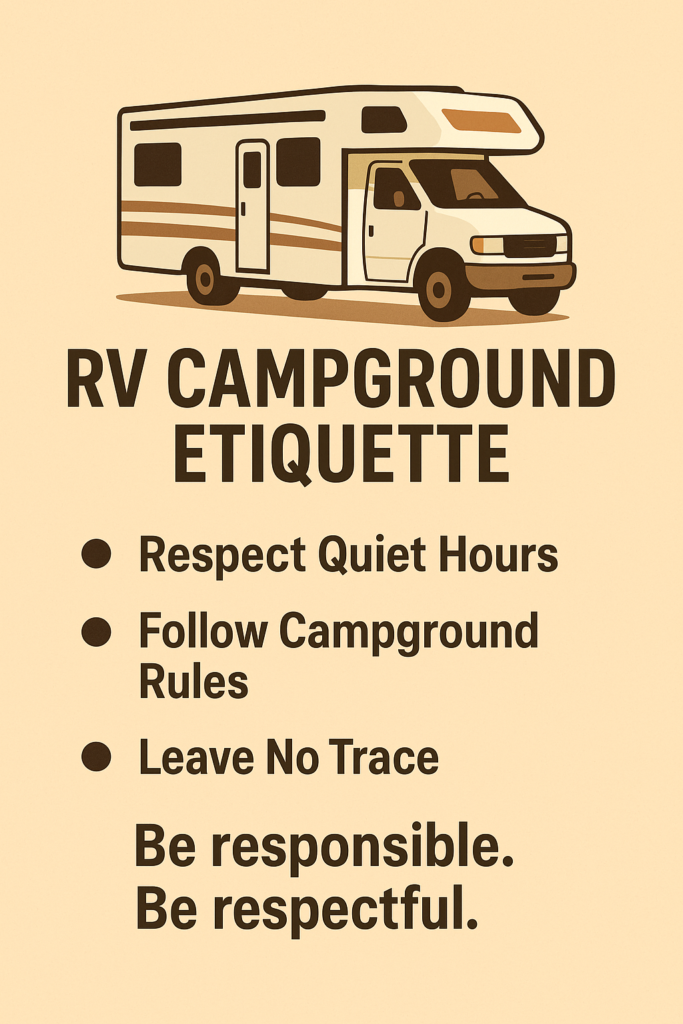
Sometimes people may not agree on what is or is not acceptable campground behavior, which is why we’re here to provide a full guide. When in doubt, a good rule of thumb is to err on the side of caution. No listed quiet hours? You can safely assume that people don’t want to hear music or loud chatter after 10 p.m.
Not every little detail will be included on a campground’s or park’s list of rules and regulations. Without written directions, apply common sense and golden rule standards. Don’t take advantage of a campground’s good faith trust: remember that your presence at a campground is a privilege, and poor etiquette hinders others’ ability to enjoy that privilege—and may result in consequences.
1. Arriving and Setting Up Your RV
RV campground etiquette begins when you arrive. Here’s how to start things right.
1.1 Respecting Check-In and Quiet Hours
Before you arrive, review your reservation to look up the check-in time and any specific instructions. Keep in mind that if you arrive early, any prior guests may not have had the chance to pack up yet. Arriving early can cause confusion and make any occupants feel rushed to clear out. Having to wait may inconvenience your own party or cause road congestion. If you know you’re going to arrive ahead of schedule, find a different location to park or explore, such as a visitor’s center.
If you arrive after quiet hours, be mindful of sleeping campers. Keep generators off, voices low, and lighting to a minimum. Arriving late at night is not inherently problematic, but it becomes a problem if the unloading process is discourteous.
If you notice someone arriving to a nearby site after you’ve set up camp, give them a chance to settle in before introducing yourself.
1.2 Choosing the Right Campsite Size
A lot of etiquette is simply followed through good trip preparedness. When booking your reservation, make sure you choose the correct site size and amenities for your RV. If you choose a site that’s too small, you may compromise your own comfort and privacy, risk blocking access, or encroach on other sites.
1.3 Setting Up Without Blocking Roads or Other Sites
If possible, set up your site without blocking the roadway or other sites. This can be easy not to notice in a large RV (especially after a long, exhausting drive), so remember to briefly survey your surroundings and adjust as needed.
If you do need to block a roadway or site temporarily, be sure to communicate the matter to other drivers and campers: provide a timeline, make it brief, and thank them for their patience and understanding. In some scenarios, a simple hand gesture may be enough to convey the message. Some people may feel frustrated or inconvenienced, but simple communication will almost always ease any tension. People generally want to be helpful and understanding—most people are not interested in escalating a situation.
1.4 Campground Generator Etiquette and Noise-Control Best Practices
Generators and electricity are among the many luxuries RV campers enjoy. Proper campground generator use is a topic of heavy debate. How long should you run your generator for? There’s no clear answer, but we have tips.
Keep in mind that regulations regarding generator use vary between campgrounds. In some places, generator use is banned entirely, which is why it’s important to research during the trip planning process. Generator sound carries—perhaps farther than many people realize. Remember that many people are camping to escape the bustle and noise of life and enjoy natural surroundings.
Some RVers may need to run generators, for instance, if they sleep with a CPAP machine. Find a campground or park that accommodates your needs and preferences.
The best policy is to only run your generator when you need to, and never at all during quiet hours. Although it may not be a concrete rule, avoid running the generator all day. If you need it running (and it’s allowed), consider briefing your neighbors—or sticking to a spot where noise is not a concern. If you prefer to keep the electricity running for longer periods, consider opting for an alternative power source, such as battery packs.
2. Managing Space and Maintaining Clean Campsites
When it comes to maintaining a clean campsite, always follow the Leave No Trace principle. Pack an adequate amount of trash bags and make sure light items are secure and can’t blow away. Take everything you brought back with you. Only dispose of trash in the correct dumpsters. An oft-cited rule is to leave your campsite cleaner than you found it.
Leaving useful items, such as leftover lighter fluid, for incoming guests is well-intentioned, but consider approaching people directly instead to ask if they want your unwanted things. Sometimes items left behind wind up becoming trash. Be responsible for the items you introduce to the environment.
2.1 Keeping Your RV, Awning, and Gear Within Your Assigned Site
This is pretty self-explanatory, but it can be an easy thing to miss when setting up a large vehicle and navigating awkward angles. Before unpacking, make sure your RV is positioned entirely within your designated site. When extending the awning and unpacking gear, ensure they don’t encroach upon others’ space.
2.2 Trash Disposal, Recycling, and Keeping Wildlife Away
Proper waste storage and disposal is essential for keeping wildlife healthy. Unsecured food waste (including spills) attracts wildlife to an area where traffic, dogs, plastic, and human food pose health risks. Respect the local wildlife by remembering to stow your trash and dispose of it in the appropriate containers. Keep in mind that some items can and cannot be recycled in different states.
Some campgrounds won’t have a separate recycling dumpster, which means you’ll have to hang onto your recyclables until you locate one offsite. In areas where bears are common, follow proper procedures for storing food in order to keep yourself and your food safe. While inconvenient, you can feel good about protecting the environment through your conscious efforts!
2.3 Using Sewer Connections Correctly and Preventing Spills
Only dispose of human waste at official dump stations or via sewage hookups. When using sewer hookups, double-check (and maybe triple-check) that lines are correctly affixed in order to prevent unwanted spillage. Never drain your gray or black water tanks onto the ground, even if you’re boondocking.
3. Respecting Other Campers
Mutual respect is key to enjoying public space. Here are some key tips for respecting other campers.
3.1 Keeping Noise Levels Down
Noise is another common issue in campgrounds: loud chatter after hours, generators, music. Be mindful of your own noise levels. In a busy campground, consider rethinking music. Even during regular hours, other people generally don’t want to listen to music drifting in from other campsites. Always familiarize yourself with rules about generators and music, and respect quiet hours.
If you have kids, camping is a great opportunity to teach the value of respect in public spaces. Consider incentivizing them for good behavior, e.g. picking up trash, keeping volume low. Maybe they have a chance to earn an extra s’more at campfire time…
3.2 Pet Etiquette: Leashes, Barking, and Clean-Up Rules
RVing with pets can be a wonderful experience. It’s important you and your fuzzy companion are set up for success.
Complaints of off-leash dogs have become more frequent in recent years, and off-leash dog attacks have increased. Off-leash dogs pose a threat to other dogs, people, and local wildlife. Even if a well-trained dog is off-leash, they are vulnerable to attacks from other off-leash dogs. Besides, fellow campers may feel very uneasy at the sight of an off-leash dog. If your dog is outside, it should either be on a leash or on a secured lead within your campsite.
Consider ditching the retractable leash too—at least for your camping trip: they’re harder to control than traditional leashes and may not be adequate to protect small animals or protect your dog from other dogs nearby. Excessive barking is a common issue in campgrounds. It frustrates campers by impacting sleep and general enjoyment. If your dog barks frequently, consider a dog hotel or leave them at home with a house sitter, working this matter into your trip budget. For full-time RVers, this is a trickier problem. Dogs who bark excessively require training to accustom them with being comfortable in their environment.
Finally, always clean up after your pet!
4. Driving and Parking Etiquette Inside Campgrounds
There are two basic ideas to remember when it comes to campground driving and parking etiquette: mind your speed and mind your size!
4.1 Following Posted Speed Limits
You may get away with pushing limits on highways, but speed limits in campgrounds are non-negotiable: they’re carefully calculated to keep drivers, passengers, and pedestrians safe. There are often a lot of pedestrians in campgrounds, and towing a trailer or operating a motorhome means bigger blind spots for potholes, rocks, people, and animals. Never exceed the speed limit in a campground. The risks are simply not worth it.
4.2 Safe RV Maneuvering in Tight Campground Roads
When maneuvering and parking your RV, the best advice is to take it slow. Leave enough room or yield to other drivers if necessary. If you’re struggling to maneuver or park the RV on challenging terrain, that’s perfectly understandable. They’re big, and sometimes campsites and roads are awkwardly shaped. Have someone step out of the vehicle and provide instructions and cues.
5. Using Shared Facilities Properly
Campgrounds are public spaces, meaning guests are expected to share and respect amenities with good campground etiquette. Report issues or breakages to the campground director or ranger. Here are some guidelines for using shared facilities properly.
5.1 Laundry Room Etiquette
Laundry mainly applies to RV parks, but how about a refresher? Timing is key when sharing laundry facilities, which means doing a little bit of planning. Firstly, set time aside for laundry to ensure you aren’t leaving loads in too long and preventing others from using the machines. If you don’t know how long the loads are, set an hour timer for each machine.
If you leave your load in too long, your wet or clean laundry may wind up on the ground—or you prevent others from getting their laundry done altogether. If you don’t want strangers handling your clothing, take care of it in a timely manner. Doing so shows respect and mindfulness of other users.
5.2 Restrooms and Shower Facilities Best Practices
Keep restrooms clean and shower times reasonable. If you like to take 30-minute long showers at home, consider cutting it to 20 at the campground. You’ll feel good about saving water, and those waiting their turn will be grateful for your promptness.
6. Respecting Privacy
Camping is a getaway, but campgrounds aren’t always as private as we want them to be. Sites can be cramped close together with little foliage or few rocks offering cover. Even in a crowded campground, it’s important to mind people’s space and privacy.
6.1 Taking Photos or Videos
Campgrounds are often located in scenic areas, and when you’re traveling with family and loved ones, they present great photo or film opportunities to capture lasting memories. When snapping photos or videos, be mindful of people who may enter the frame. If you’re an influencer or just taking videos, make sure to receive permission from anyone you recorded.
In the digital age, people often take to recording others during an unpleasant situation, either to capture poor or illegal behavior as evidence or achieve online virality. Keep in mind that although recording may become important, doing so may escalate a tense situation.
If someone begins a verbal altercation with you, you should implement deescalation strategies. Maintain a calm, level tone, try to understand where the person is coming from, or leave if possible. Call the camp director or emergency services when the situation is unresolvable or escalating. Of course, your own safety is paramount, so read the situation and act accordingly.
6.2 Minding Other People’s Space
According to various online forums, this is among the most important campground etiquette rules. Although campgrounds and parks are public, campers pay for their space. As tempting as shortcuts are, never walk through other people’s campsites. It will probably be interpreted as disrespectful or even threatening. Because walking through others’ campsites is highly discouraged among campers, choosing to do so might make people—especially female or solo campers—feel uneasy.
7. Departing the Campground
Packing up your campsite can be a lengthy affair, so plan ahead to ensure you leave your campsite by check-out time. This ensures you don’t keep people waiting or incur an additional fee.
7.1 Quiet Morning Tear-Down Practices
Although many campgrounds and parks provide specific quiet hours, it’s recommended to keep volume low until 9:00 a.m. Place heavy items carefully, keep the generator off, close doors mindfully, keep voices down, and don’t play music out loud (even if you have great taste).
7.2 Cleaning the Site Before Leaving
Before hitting the road, do a final sweep for any trash, spills, or loose items. This keeps the site clean for the next paying customer, ensures you don’t leave any personal things behind, and protects wildlife from human food and refuse. Leaving no trace is essential campground etiquette.
Conclusion
In this article, we’ve covered basic campground etiquette for campers. If an issue arises regarding a specific issue or scenario, consider visiting a campground etiquette forum, or general camping forum (such as r/camping on Reddit.com) to consult peers on their perspective. Even in moments of uncertainty, you can always implement the Golden Rule: treat others how you wish to be treated—with dignity, respect, patience, and understanding. Abiding by this principle will foster a respectful and enjoyable camping experience.
What are some rules of campground etiquette?
Leave no trace, keep volume down, follow campground rules, be responsible, and be respectful of others.
What is the noise etiquette for camping?
Campgrounds typically post quiet hours, which should always be respected. Quiet hours are usually between 10 p.m. to 7 a.m. However, campers should be conscious of noise and volume at all hours.