
RV repair costs are only going up. Between unpredictable economic changes and rising repair costs, RV owners need to prepare options for funding repairs. Ultimately, every RVer will choose between self-insuring vs buying an RV warranty…or possibly both.
The unfortunate truth is that RVs are prone to breakdowns—and with so many complex working components, these breakdowns are expensive. Having a financial plan in place will save you stress, time, and money.
There are two main approaches to securing protection from unexpected repairs. The first is an extended RV warranty. These protection plans have grown in value and popularity due to rising unit prices and repair costs.
Alternatively, owners may choose to self-insure. Both strategies have their pros and cons, with one being more suitable for certain RV owners than the other. Financial tradeoffs depend on factors such as risk tolerance, RV age, repair likelihood, and frequency of travel. It comes down to what works best for you. So how do you choose?
First, let’s dive into RV extended warranties.
What Is an RV Extended Warranty?
An RV extended warranty, or extended service contract, is a policy designed to “extend” manufacturer warranty service beyond the term limit. Extended warranties cover the costs to repair or replace components outlined in the contract. Warranties are provided by insurance-backed administrators and sold through RV dealers or trusted third-party warranty brokers, like Wholesale Warranties.
What an RV Warranty Typically Covers
Although coverage levels vary, here are some basic examples of what is covered by a typical RV warranty:
- Engine & transmission
- Slide-outs
- Appliances
- Electrical systems
- HVAC systems
- Leveling system
- Waste and water systems
Pros of Buying a Warranty
- Predictable repair costs
- Protection against catastrophic failures
- Protection against overcharging
- Nationwide repair networks
Cons of RV Warranties
- Coverage exclusions
- Deductibles
What Does Self-Insuring an RV Mean?
“Self-insuring” an RV involves setting aside a dedicated fund, instead of a premium or one-time payment, specifically to address potential repairs. Self-insuring does not replace legally required minimum liability RV insurance.
How RV Self-Insurance Works
Owner sets aside money for repairs instead of purchasing a warranty plan. RV owners who use this method typically place a set amount or percentage of monthly income into a savings account, which will accrue interest over time.
Benefits of Self-Insurance
- Full control of funds
- No coverage exclusions
- Money remains yours if unused
Risks of Self-Insurance
- Major repairs can exceed savings
- Requires discipline to save consistently
- Unexpected failures early in ownership
- Limited access to realistic parts and labor costs
The Hidden Costs of Self-Funded RV Repairs
This is something people don’t usually consider: there is a significant hidden benefit to having an RV warranty expert on your team when your RV needs repairs. When working with a repair shop, your warranty adjustor will advocate fair pricing. Adjustors have unique access to parts and labor guides, so they know when policyholders are being upcharged—and they’ll bring the price down. This is the truth about why some technicians don’t want to work with warranty companies.
Average RV Repair Costs (Why This Decision Matters)
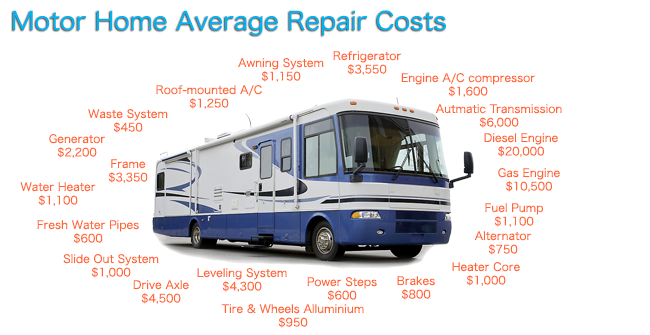
As a warranty broker, we have unique insights into RV repair statistics. We’ve compiled the following based on our own claims data.
Here are the top 5 most common RV repairs:
- Slide-out motor failure
- Water pump failure
- Air conditioner replacement
- Hot water heater
One repair can exceed several years of warranty payments. A warranty policy can pay for itself in one visit.
H2: Financial Comparison: Self-Insurance vs RV Warranty
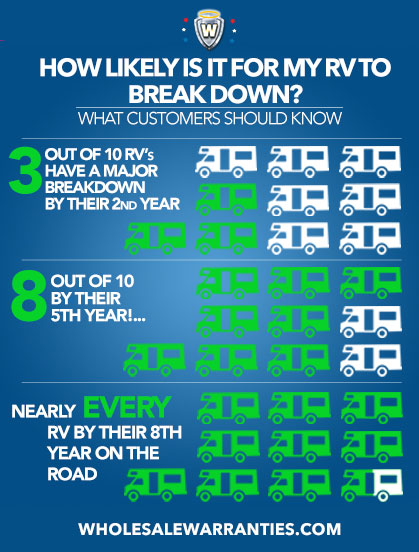
One helpful way to guide your decision-making process is to create a simple scenario comparison. This means you’ll have to receive a free RV warranty quote to get a basic idea of premium and deductible costs. Compare one year of warranty premium and deductible costs with one year of monthly repair savings. Find the break-even point while considering the fact that RVs are likelier to fail the longer they’re on the road.
To keep things simple, some RV owners simply choose to double the price of their extended warranty quote and put that aside for repairs, but this isn’t a strategy recommended for everyone.
Be sure to check out this RV warranty comparison guide for expert input. As always, it’s best practice to receive multiple quotes from different providers to wholly weigh your options.
H2: When an RV Warranty Makes More Financial Sense
Extended warranties are a great option for the long-term traveler. These RVers get a lot of use out of their RVs. Over time, the rig is likelier to experience unexpected failures. For people on the road, access to mobile mechanic services and trip interruption reimbursement can be crucial.
Without warranty protection, full-time and seasonal travelers are vulnerable to major disruptions. Even for occasional RVers, one major breakdown can derail a whole weekend camping trip.
Situations where RV warranties are beneficial:
- Full-time or frequent RV travel
- Used/older motorhomes
- Complex rigs (e.g. luxury Class A units)
- Owners who want predictable expenses
- Low emergency savings
- Owners who are risk averse
- Resale valuation
H2: When Self-Insuring Is the Better Strategy
Scenarios where it may win financially:
- Extensive DIY repair capability (e.g. engine work, slide-out motors)
- Large emergency fund
- Low RV usage
H2: Key Questions to Ask Before Choosing
Here are some important questions to work through when deciding whether to buy an RV warranty:
- How old is the RV?
- What are common repair risks for this model?
- How much emergency savings do you have?
- How long will you own the RV?
- Do you travel full-time?
H2: Final Verdict: Which Option Is Financially Smarter?
Self-insuring vs buying an RV warranty ultimately comes down to individual needs and preferences. Here’s the summary:
Self-insurance wins if:
- You have strong savings
- Repairs are unlikely or you can perform them yourself
- Intermittent or very rare RV usage
Warranty wins if:
- Risk tolerance is low
- RV repairs would be financially burdensome
- RV usage is heavy
When deciding whether to buy an RV warranty vs self-insure, the two most important things to evaluate are your own risk tolerance and RV usage. Determining these factors will guide you through an informed financial decision.
FAQs
Is an RV extended warranty worth the cost?
Yes; it certainly can be. It’s important to weigh risk protection versus paying for repairs out of pocket.
Do RV warranties cover appliances and slide-outs?
Yes; a typical extended RV warranty will cover appliances and slide-outs. However, coverage varies by provider.
What repairs are most common in RVs?
The most common RV repairs include appliance failures, electrical issues, water pump problems, and slide-out malfunctions.


